Showing posts with label Freedom of expression. Show all posts

Friday, 12 February 2021

Joint Statement on Thailand’s use of Draconian Laws


Draconian laws have long been used in Thailand to subdue the rights of people and conduct human rights violations. Despite Thailand’s cycling between authoritarian regimes and democratic regimes since the end of absolute monarchy in 1932, these laws have been used throughout. Moreover, Thailand’s penal code is filled with draconian laws which particular regimes have successfully strengthened. The major draconian laws that have been used by the authorities in Thailand include Article 112 (Lese Majeste), Article 116 (Sedition), and the 2017 Computer Crimes Act. The latter of which had been bolstered by the military junta (NCPO) to crackdown more heavily on descent. It is imperative that the global community condemn these draconian laws and the heavy hand with which they have been applied. The use of these laws does not meet international standards and it is important for the international community to call on Thailand to adhere to its international obligations. 

Lese Majeste charges carry a sentence of between 3-15 years for every count. Sedition carries a sentence of up to 7 years. Thailand’s Computer Crimes Act provides the authorities sweeping powers to crackdown on people’s free expression. These laws work in concert to create an atmosphere of fear, where people have to self-censor and people are imprisoned or worse for the smallest shows of expression and dissent. They have in their long existence been used to put people away and have even forced Thai citizens. It is in this atmosphere that the political elite can act with impunity that led to too many instances of tragedy and has seen Thailand becoming one of the most unequal societies in the world. Moreover, these laws are used to hamper democratic transitions as the status quo has these tools to assert themselves.

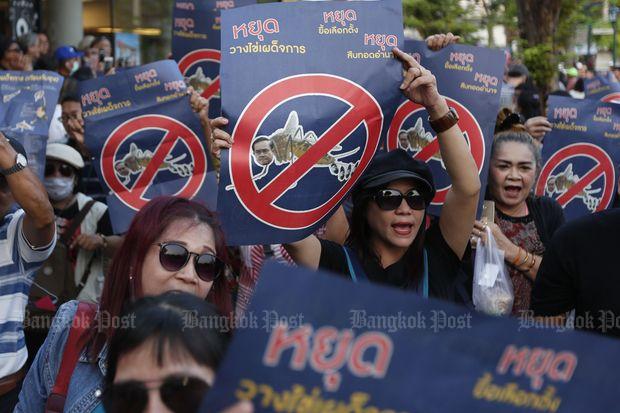
Last year saw the significant escalation of youth-led protests around Thailand, which have now galvanized the nation with calls for a number of reforms. These include democratic, educational and monarchical reforms. With the escalation from protestors, the authorities have increased their usage of undemocratic and non-rights respecting means from suppressing the protestors. This includes the mobilization of riot police, the use of water cannons and tear gas, as well as protestor intimidation. Equally distressing is the increased use of judicial bullying and these draconian laws. The authorities’ escalation involved the mass arrest of protestors, a clear violation of so many individuals’ right to free expression and peaceful protest. Since we have seen the return of the use of the Lese Majeste after a pause for 2 years and many protest leaders being charged with various counts of these draconian laws. Those charged with Lese Majeste have now reached at least 58 people. The tragedy of the use of these laws is underscored by how pro-government counter-protestors have not received the same treatment. These laws are not applied impartially. At the root of these issues, unfair laws are being applied unfairly and this is damaging Thailand’s societally and economically. Moreover, these laws prohibit so many in Thailand from exercising their human rights and this needs to change. 

We condemn the Thai government’s continued use of draconian laws on its people. These laws are unjust and have been applied unjustly for far too long. The atmosphere of fear needs to seize and the Thai people must be able to live in a society where there are checks and balances and their rights are respected. We call on the global community to condemn Thailand’s use of these laws and to hold Thailand accountable for its human rights abuses. 

Signed

Thailand Human Rights Campaign UK

Stiftung Asienhaus - Germany

Universal Peace Federation Myanmar - Myanma (Burma)

Kanet Kongsaiya - Norway

Tang Lolo - Taiwan


Tuesday, 24 November 2020

Open Letter to UK Foreign Secretary on the Illegitimate Use of Force Against Peaceful Protestors in Thailand

As a signatory of the International Covenant on Civil and Political (ICCPR), Thailand is obligated to uphold the principles enshrined in the ICCPR. Those include the right to peaceful assembly under Article 21, the right to hold opinions without interference under Article 19, and the freedom of association under Article 22. The Thai government has failed to uphold these obligations. Hence, we ask that you stand with us in upholding the principles of free human beings with civil and political freedom and the obligation to promote universal respect for human rights. We urge that you condemn the illegitimate force used against peaceful protestors in Thailand and call on the Thai authorities to heed the demand of protestors and respect human rights. 


The Thai authorities have been carrying out a brutal crackdown on peaceful protestors in Thailand. The excessive force used by the Thai authorities has occurred prior to the 16th of October 2020, but that day saw a notable escalation, as seen by the deployment of water cannons, tear gas and threats to use rubber bullets against peaceful protestors. These actions undermine the right to protest and expression of Thai citizens signifying the deterioration of good governance in Thailand and a refusal to abide by Thailand’s human rights obligations. Thai authorities have continued to exercise undue force on Thai protestors, as seen on the 17th of November 2020. In attempts to disperse the demonstrators in front of the parliamentary building, the use of tear-gas, high-pressured water cannons mixed with irritable chemicals, and rubber bullets were employed. Pro-Monarchy counter-protestors contributed to this assault with rocks, wooden boards, flag poles, and firearms. Yet, only pro-reform protestors have been reprimanded for exercising their basic human rights. These actions have led to an escalation in demonstrations, tensions, and injuries towards various citizens. These include children, adults, elderly people, and medical staff. Moreover, not one pro-monarchy counter-protestor has been charged for crimes of battery, assault, and deadly use of firearms. Those protesting peacefully are doing so because the Thai government has failed them, inequalities are rife in Thailand, and the people demand a brighter future. Many of these protestors are young people in Thailand who want to live in a freer, more democratic, and rights-respecting society. Hence, they are speaking up against the tyranny of the military-controlled government in Thailand. It is our consideration that the United Kingdom shares the same values of respect for democracy and human rights. Hence, the Thailand Human Rights Campaign UK would like to urge you to condemn the actions of Thai authorities and call for them to heed the demands of protestors. 


Sincerely, 

Thailand Human Rights Campaign 

24 November 2020


Tuesday, 3 May 2016

Update : The climate of fear over the country ahead of the referendum on a new constitution

As the country prepares to vote on a final draft Constitution, which was released publicly on 29 March, includes clauses mandating a fully appointed Senate,  seats reserved for senior military officers and enabling the appointment of an unelected prime minister. The charter gives the military broad control over administrative affairs even after an elected government is installed.

The draft also recommends that the junta-run National Council for Peace and Order (NCPO) will maintain absolute power until a new cabinet is formed and can intervene at any time to re-assume total power.       

The draft charter, written by the Constitution Drafting Committee chaired by Meechai Ruchupan, is scheduled to go to a public referendum on Aug 7.

Since the Thai constitution drafting committee completed the draft charter, the authorities have intensified their campaign to suppress the human right to freedom of expression. The law governing the rules for the referendum, which was approved by the current military-appointed legislature on 7 April, mandates up to 10 years imprisonment for anyone convicted of disseminating false information to influence voters or otherwise disrupt the referendum. 

Article 61 of the Referendum Act imposes a prison term of up to 10 years, a fine of up to 200,000 baht and loss of electoral rights for five years on anyone who publishes or distributes content about the draft constitution which deviates from the facts, contains rude and violent language, or threateningly discourages voters from participating in the referendum.

Repression and Intimidation

On 30 March 2016, the Pheu Thai Party issued a statement condemning the final draft of the constitution and urging people to turn it down in the referendum, scheduled in August. The junta threatened the Pheu Thai Party if the statement misleads the public.

On 2 April 2016, the Thai military ordered ban a seminar on the controversial draft constitution in the northern province of Chiang Mai as the public referendum on the draft is drawing near.   

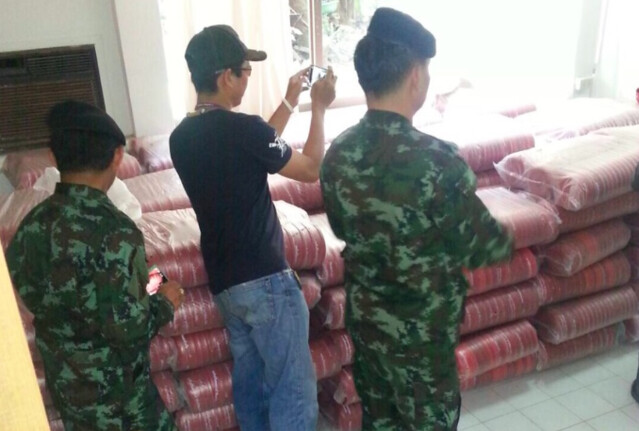
On 2 Apr 2016, military and police officers searched the offices of Pheu Thai party politicians in northern Thailand and confiscated red bowls inscribed with Thai new year greetings from former Prime Minister Thaksin Shinawatra.


Earlier, military officers in Chiang Mai arrested Theerawan Charoensuk, 57, for posting on Facebook a picture of herself holding the red bowl with the Songkran message from Thaksin.

The military filed a charge against Theerawan under Article 116 of the Criminal Code, the sedition law, for posting the picture. Later, the Military Court of Chiang Mai released her on bail of 100,000 baht, about 2800 USD, pending a military trail. If found guilty, she could face up to seven years in prison.

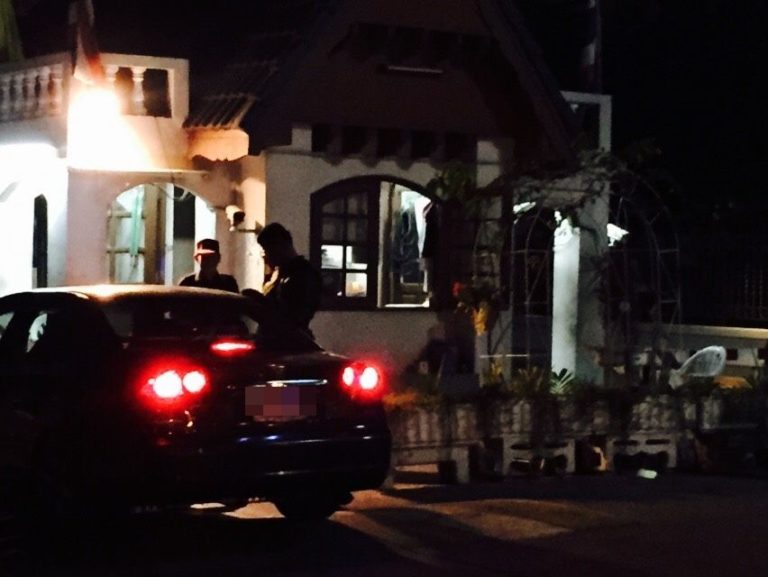
On 13 April 2016, a dozen soldiers in four vehicles arrived at the home of Pheu Thai politician and former MP  Watana Muengsuk who had publicly stated concern about Worachai’s welfare and the right to campaign against the draft charter before the referendum. 

On 18 April 2016, Thai Junta ordered a politician of Phue Thai Party and former MP Watana Muangsook to report to the 11th Military Circle camp in Bangkok. He was detained at the 9th Infantry Division in Kanchanaburi province near Burmese border over a statement he posted on a social networking site against the draft Constitution. He was freed after 3 days detention.
This is the third time that Watana Muangsook has been held in military detention without charge or trial since 2 March on the basis of his peaceful exercise of the right to freedom of expression.


On 21 April 2016, Watana Muangsook, a former Member of Parliament from Pheu Thai Party complaint that certain people pressured the Charoen Pokphand Company (CP), one of the biggest conglomerates in Asia run by the family of his former wife, to convince Weerada Muangsook, his daughter, to leave the country.

On 22 April 2016, soldiers in the northeastern (Isan) province of Udon Thani are intimidating anti-mine activists ahead of a planned forum on the environmental effects of a potash mine.


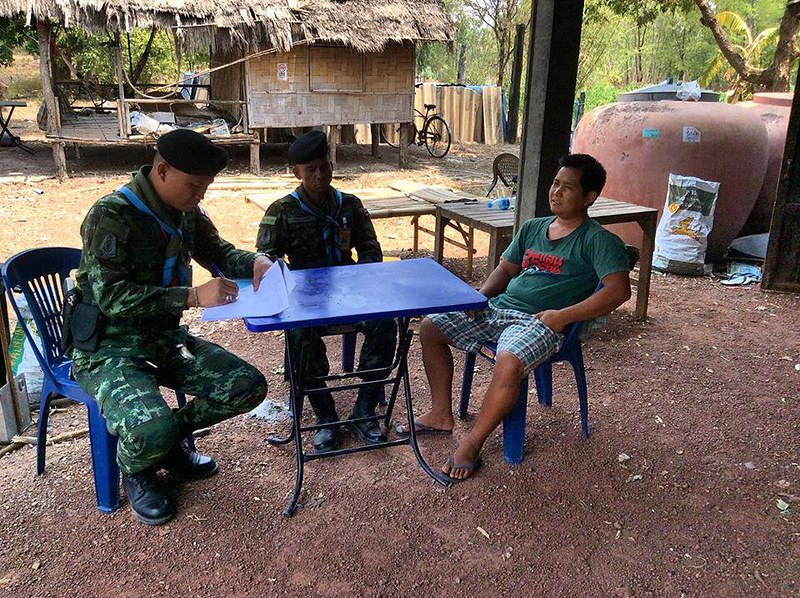
On 22 April 2016, the military has summoned the leader of an embattled indigenous seafarer community in the southern province of Phuket for a discussion, accusing him of violating a junta order. He was  intimidated by the military 

On 24 April 2016, the military indicted six activists for demanding an investigation into the Rajabhakti Park corruption scandal.  Those indicted are reported to be Sirawit Serithiwat, a student activist from New Democracy Movement, Anon Nampa, a human rights lawyer and core leader of Resistant Citizen, Kititach Suman, Wisarut Anupoonkarn, Koranok Kamda and Wijit Hanhaboon for violating the junta’s political gathering ban.

25 April 2016, Gen Prawit Wongsuwan, the deputy junta head and Defence Minister, told the media that no one is allowed to criticise the junta-sponsored draft constitution publicly as the Draft Referendum Act is already in force.

The deputy junta head ordered the authorities to launch investigations into the People’s Democratic Reform Committee (PDRC) and the anti-establishment red shirts for announcing their stands on the draft constitution.  


On 25 April 2016, the junta has threatened Bencharat Sae Chua, a lecturer of Mahidol University’s Institute of Human Rights and Peace Studies. The lecturer is distributing information for a vote against the military’s draft charter has been threatened with Section 61 of the Referendum Act of 2016. This could mean up to 10 years in jail.


On 27 April 2016, Thai military government cited power under Section 44 of the Interim Charter to arrest 10  Facebook users for their online messages criticising the Junta leader and the regime. The military officers detained them at the 11th Military circle. The eight  have been charged with inciting public unrest under the Criminal Code's Section 116. They can face up to 10 years in prison and a fine of 200,000 baht. 

On 27 April 2016, an election commissioner filed a complaint under the Draft Referendum Act against a fundraising organization in northeastern province of Khon Kaen. She was charged under Article 61 of the Referendum Act, where the penalty is up to ten years in jail, a fine of up to 200,000 baht and loss of electoral rights for five years.

On 27 April 2016, Thai police arrested 16 activists for standing solidity with the 10 people abducted earlier by the military at the Victory Monument. One was taken away by the military after the arrest. Later, the 15 activists were released.


On 27 April 2016, Puea Thai Party members have been targeted. Some 300 police and soldiers searched the homes of two politicians among others in Nakhon Sawan, accusing them of being “influential” figures. The military barred reporters from the houses they searched.  They found nothing illegal other than a large number of red plastic bowls.

On 28 April 2016, The junta charged eight dissidents abducted by the military with sedition while two of the eight are also accused lѐse majesté.


On 29 April 2016, Military court rejects bail for abducted eight junta critics. In addition to sedition and computer crime charges, Harit Mahaton and Natthika Worathaiyawich were accused of insulting the monarchy based on personal messages in Facebook's chat function or standalone Messenger app.

On 29 April 2016, Burin Indin,  who was detained along with 15 protesters at the rally calling for the release of the10 at Victory Monument on 27 April. While other protesters were released that night, Burin was taken away from police custody by soldiers and held at an undisclosed location on 27 Apr. He was charged with lѐse majesté law.


On 30 April 2016, Burin Indin  was brought to the martial court to be indicted for for lese majeste, which carries maximum penalty of 15 years per offense. The military junta declared that Burin had committed lese majeste in his private chats with other people. 

On 1 May 2016, three anti-coup activists were detained when they gathered on the skywalk near the BTS Chong Nonsi station to demand freedom of expression. Police charged activists for violating the public cleanliness act by posting messages on post-its for the eight abducted junta critics while a few were interrogated for participating in the same activity.


On 2 May 2016, the 14 rules were issued by the Election Commission and formally became law, make even well-meaning discussion risky. Under the regulations, people must express their opinions with polite words without distorting the facts.

On 2 May 2016, Mr Narit, an abducted critic of the junta charged with lѐse majesté  warned it was no longer safe to send private messages to the inbox. Section 112 of the Criminal Code, or the lese majeste law, does not limit the crime only to public sphere, so personal correspondence can be used as evidence as well.

On 3 May 2016,  The military summoned a pro-democracy academic and activists into a military camp. Pinkaew Luangaram, a pro-democracy academic from Chiang Mai University, Rodjaraeg Wattanapanit, the first Thai woman to be awarded with the International Women of Courage Prize from the US government from her advocacy for democracy, and Pipob Udomittipong, an independent translator and democracy activist, reported to Kawila Military Base in Chiang Mai.


On 4 May 2016, The Thai election commission warned people selling t-shirts with prints about the referendum on the junta-sponsored draft constitution might face up to 10 years imprisonment.

On 6 May 2016, Patnaree Chankij, the mother of a prominent anti junta activist leader has been charged with insulting the monarchy, an offense punishable by up to 15 years in prison. 


Patnaree, 39, was previously questioned at home by the military in December 2015 after her son announced a plan to protest alleged corruption in a multi-billion baht army park project. Patnaree denounced the visit as an intimidation tactic employed by the junta to dissuade Sirawith from his activism.


On 8 May 2016, the Military Court granted temporary bail to Patnaree Charnkij, mother of a prominent anti-junta activist. Bail was set at 500, 000 baht. She was released with conditions include agreeing not to participate in political activities and being barred from travelling abroad without the court's permission.


On 10 May 2016, the military court allowed bail for the eight administrators of a Facebook page mocking the prime minister but police asked to further detain two them who were also charged with lese majeste. Six of Facebook 8 released on bail. Natthika and Harit have been charged with lese majeste law. The police want these two held without bail. Their release comes with the condition they cannot leave the country or incite unrest.


On 11 May 2016, although the six other suspects were granted bail on 10 May, the martial court denied release to Harit and Nattatika. Harit and Nattatika remain jailed on a charge of royal defamation. The lawyer will request bail for the pair again on May 19, when their current remand session expires.


On 12 May 2016, about 10 soldiers entered into Warachai’s house  without permission and removed electric cabling believed to be part of its CCTV system.

Soldiers and police raided the home of former Pheu Thai MP Worachai Hema after he reportedly told the media that junta leader Gen. Prayuth Chan-ocha exercises his power in a fascist way. 


On 19 May 2016, the Bangkok Military Court denied bail to Harit Mahaton and Natthika Worathaiwich, charged under the lèse-majesté law, ruling that the two might obstruct the investigation process and were flight risks.


The court again granted bail for the eight for another 12 days from May 13 to July 3. They are to report to the court in this case on July 3.

Ms Patnaree, the mother of an activist student Sirawith who had earlier been freed on bail, also reported to the court.  She was again released on bail and required to next report to the court on May 31.


On 23 May 2016, The military court sentenced Preecha 6 months in jail and a fine of 8,000 baht.
As Preecha confessed, the sentence was halved to 3 months imprisonment and a 4,000 baht fine. He was given a one year suspended jail term. He was able to return home today after paying the 4,000 baht fine.


Pracha was accused of such offences for giving flowers to support Pansak Srithep, a pro-democracy activist and the father of a boy killed by the military during the 2010 political violence, while the activist was leading a three-day march called “I Walk Therefore I Am” on 15 March 2015 to campaign against the use of military courts to try civilians. The march was organised by Resistant Citizen, an anti-junta activist group.


On 5 June 2016, military and police officers intimidated  the United Front for Democracy Against Dictatorship (UDD) at briefing on referendum watch campaign despite the junta leader’s promise that opening such centres is allowed.  The officer stated that they had been ordered to demand the cancellation of the briefing.


The UDD refused. Later, they managed to launch an Anti-Electoral Fraud Centre to monitor the public referendum to pass the junta-sponsored draft constitution. In the campaign, red-shirt volunteers will watch the referendum at polling stations across the country to prevent fraud.


On 6 June 2016, Junta leader, General Prayuth Chan-ocha had temper tantrum over the United Front for Democracy against Dictatorship’s action in setting up a centre to monitor for fraud in the scheduled charter referendum on Aug 7.  The following hour, junta was seeking to take legal action against the UDD whether those involved in the launch of the centre have violated the NCPO’s 3/2015 order which is intended to deal with people suspected of trying to spark political and social unrest.


UDD has asked the Constitutional Court to rule within seven days whether paragraph two of Section 61 of the Referendum Act is unconstitutional or not.


On 8 June 2016, The Constitutional Court agree to review the law which effectively banned any kind of campaign.


On 9 June 2016, Election Commissioner threatened legal action against activists for making music video opposing junta's charter referendum. Somchai Srisuthiyakorn, member of Election Commissioner said that activists who performing in the MV might be charged under the 2007 Computer Crime Act or for violating the orders and announcements of the National Council for Peace and Order (NCPO).


Under military rule, Thailand’s human rights crisis has gone from bad to worse. The repression will further increase until August. It is obvious that the military’s grand design is to weaken the political parties in order to have easily to disposable coalition government. Whatever the outcome of the referendum, the military will remain the real power.


Updated: 9 June 2016


Monday, 4 January 2016

Freedom of expression one year after the 2014 coup

One year has passed , it can be concluded that the country is still far behide  fom being democratic and having respect over human rights as the self-established government does not understand anything about human rights and freedom expression. Many law and regulations have also been review which seem to pose a threat to human rights of people in the future. Everything that is considered as anti-NCPO is viewed to be capable of incite unrest.

According to the Internet Law Reform Dialog (iLaw), it show how human rights have been violated during the period of one year as following:

On 22 May 2014, the military clique in the name of “National Council for Peace and Order (NCPO)” seized power from the Yingluck Shinawatra government citing as its pretext the incessant violence which has led to massive casualties among people and damage to properties, hence the seizure of the power to stem the destructive causes.  

After the coup, at least 751 individuals were summoned by the NCPO. At least 424 were deprived of liberty. Some have been forced to undergo “attitude adjustment” to reeducate them about the necessity for the military to seize the power and then let go. Meanwhile, at least 163 individuals have been pressed with political charges. The NCPO has imposed Martial Law and then issued the NCPO Order no.3/2015 to ban political gatherings, restricting freedom of the press, and forcing civilians to be tried by Military Court. At least, 71 public activities were intervened or cancelled by the use of military force.  

Please note that some refference links may avilable only in Thai 

The summoning of individuals 
During the one year after the coup, from 22 May 2014 to 22 May 2015, at least 751 individuals have been summoned by NCPO. The summonses were made through different ways including broadcasting the names on radio and TV and other informal means. Some have received a phone call asking them to have some food or coffee (with military officials). Some saw military officials visited them their residence simply to invite them for a meeting [Read more about the evolution of summoning and visitation under Martial Law].

Comparatively, those who are affiliated with the Phue Thai Party or the Red Shirts have been summoned proportionately more than other groups, or at least 278 of them while, at least 41 individuals who were affiliated with the Democrat Party or the People's Democratic Reform Committee (PDRC) and the Network of Students and People for Thailand Reform (NSPTR) were summoned. In addition, at least 176 academics, activists, students, writers and journalists have also been summoned by the NCPO. Most of them have to sign a release form which basically prevents them from participating in any political activity and/or requires that they have to ask for permission from NCPO prior to making any travel abroad.  

At least 22 of them were pressed with charges after they reported themselves to the NCPO. Six were prosecuted with lèse majesté charge or violation of the Penal Code’s Article 112. Apparently, apart from being a venue to bring in individuals for “attitude adjustment” program or to prevent individuals from participating in political activity, the summoning has been used as a shortcut to bring in people against whom the authorities want to press charges. [See the list of individuals charged with cases related to politics after the 2014 coup]

Among them, there are at least two suspects who died in custody including Pol. Col. Akkharawuth Limrat and Mr. Surakrit Chaimongkhol.

230

An emerging trend of lèse majesté cases after the coup 

The lèse majesté prosecution against prominent persons alleged to have claimed their connection with the royalties 

As far as it could be documented, prior to the coup, only two individuals faced lèse majesté charge as a result of their bragging about connection with the royal family and committing fraud including the Assawin and Prachuab cases. But after the coup, at least 30 individuals were pressed with cases regarding the violation of Article 112 simply because they were accused of claiming their royal connection for personal gain.  

It started with the arrest of Mr. Chairin, Secretary General of the “Glory of the King Office” in November 2014 followed by the arrest of high ranking police officials including Pol Lt Gen Pongpat Chayapan and Pol Maj Gen Kowit Wongrungroj in the same month. Several other prominent figures were purged the same charge including close relatives of the former Princess Consort Srirassami.  


The rising number of lèse majesté convicts and the arrest and raids against internet radio 

During the one year after the coup, at least 46 individuals have been charged for violation of Article 112 to stifle their freedom of expression. This is comparatively high considering that prior to the coup, there were only five remaining convicts on lèse majesté charge and five cases pending in the Court.  

The massive raid or the eradication of “Banpot Network” accused of producing and distributing audio clips containing political criticisms has led to the arrest and charging of at least 16 individuals. It started with Chaleaw who was summoned to report himself to the NCPO and faced legal action for his alleged uploading of Banpot audio clips into file sharing sites. He was sentenced to three years with suspension by the Criminal Court. Then, "Kawee" was arrested, but was then released for unknown reasons.  

Early 2015, Hassadin, who was accused of being the voice of “Banpot” and others, altogether 14 of them, were nabbed on 24 April 2015. 12 of them were indicted by the Judge Advocate in the same case, while Tara and “Chaba” were indicted in two separate cases. They are awaiting hearing schedule to be fixed by the Military Court. There are well over 400 Banpot audio clips distributed online since 2010, but the arrest just happened now.  

At least five individuals were charged for violating Article 112 after they had reported themselves as summoned to the authorities including ThanatKhatawut"Jakkrawut"Siraphop and Pol.Sgt.Maj.Prasit. The arrest of a number of lèse majesté suspects was carried out by military officials, and they were held in custody and interviewed invoking Martial Law including PongsakChayoAnonTiansuthamOpasPatiwat, etc.  

234

The Military Court doubled lèse majesté sentence 

The Penal Code’s Article 112 provides for imprisonment of 3-15 years. Previously, the Court of Justice often sentenced a guilty person to five years per count.  

But after the coup, an announcement has been made effectively to authorize the Military Court to try certain cases against civilians including lèse majesté cases. In the one year after the coup, the Military Court delivered at least four verdicts on lèse majesté cases relating to freedom of expression including the cases against Kathawuth, "Somsak Pakdeedej", Thiansutham, and Opas. In the cases against Kathawuth and Thiansutham, the Military Court sentenced them each to ten years per count whereas in the case against "Somsak Pakdeedej", the Court sentenced him to nine years per count, and the case against Opas, three years per count.  

Apparently, the Military Court has doubled the penalty rate in lèse majesté case. In the case against Thiansutham who was accused of making five facebook postings, he was sentenced to altogether fifty years, prior to be reduced to 25 years given his pleading guilty. It was the most severe punishment in Article 112 case that iLaw has ever documented.  

The arrest and prosecution against mentally ill persons 

At least three suspects in Article 112 cases were arrested after the coup and have been sent for mental examination while continued to be held in custody. The three of them are "Tanet"Samak and Prachakchai. As for the cases against "Tanet" and Prachakchai, it was reported that prior to the coup, the police had approached them and after talking to them, they had decided to drop charges against the two persons finding they were mentally unfit. Still, after the coup, they were arrested and pressed with charges.  

As for .Tanet., according to mental examination, he was found to suffer paranoid. Even, the cash of 300,000 baht was placed as deposit, the Court denied him bail.  


Restriction of freedom of assembly and public activity after the coup  


After the coup, the NCPO issued the Announcement no. 7/2014 banning political gathering and imposing punishment including imprisonment for not more than one year or a fine of not exceeding 20,000 baht or both. During May to June 2014, a series of anti-coup activities were organized, and at least 63 individuals were arrested, of which 24 were pressed with charges concerning the violation of the political gathering ban. All were convicted and sentenced to suspended terms. None of them has been put in jail so far. After June, the anti-coup activism has been in recess, until the “Citizen Resistant” organized an activity in February 2015, as a result of which the four organizers and participants were arrested and pressed with charges concerning the violation of the political gathering ban.  

235

16 March 2015, 4 persons who were the accused in the "My Dear Election case" sang together with students who came to show their support in front of the Bangkok Military Court. The four were released after the court rejected a pre-trial detention petition filed by the police

Event cancellation, asking to speak at the event: Intervention of public activity by the military 

Public events which are outright not anti-coup activities including public discussion, theatrical performance or movie screening, though have not been banned completely, but have to face intervention or censorship.  

From our documentation, in the past one year after the coup, at least 71 public gatherings and events have faced invention or censorship by the military including 22 public gatherings and 49 other events including public discussion. In terms of issues being censored, events concerning history and politics were censored or intervened the most (33 times) followed by issues concerning land and community rights (12 times).  

The intervention or censorship is dependent on issues to be raised at the events. For example, if the events are concerned with politics or military, they were often totally banned such as the public discussion on "the demise of dictatorships aboard" organized by the League of Liberal Thammasat for Democracy (LLTD), which had to be called off in the middle, or the public discussion on “Justice Under Construction” organized by the Thai Lawyers for Human Rights (TLHR), which had to be postponed.  

Other activities which have faced intervention included the public discussion on “Rights and Freedom of People under the Draft Cyber Security Act” organized by the Santi Prachatham Library which was attended by military officials in uniform and was recorded with still picture and audio throughout the event. One of the military officials even asked to speak as a resource person. The public discussion on "Na Moon EIA: Injustices of Land Petroleum Exploration in the Northeast” at the Mahasasakham University was allowed to proceed given that the organizers had to refrain from criticizing the performance of the NCPO junta regime, showing any resistance sign and military and police officials have to be invited to participate in the event.  

Sanitation Act: The freedom which can be exercised at the expense of fine 

Under the military regime, laws to crack down misdemeanors including the 1992 Sanitation Act have been invoked to impede the exercise of freedom of expression. The laws do not intend to impose hefty penalty, but has incurred unnecessary burden for those who want to exercise their right to freedom.  

From our observation, there are at least four cases in which the persons who have simply exercised their right to freedom of expression were fine invoking the Sanitation Act including the case of relatives of those who were killed during the 2010 demonstration who distributed leaflets in a public place and were fined 5,000 baht as the maximum rate, the case of students hanging black banner to commemorate the 19 September coup on a flyover in front of the office of Thai Rath newspaper or the case of students hanging a banner criticizing the 19 September coup on a flyover on Pyathai Road, both of whom were fined 1,000 baht each, or the case of Polwat who distributed leaflets in Rayong opposing the coup, who was fined 500 baht. 

The use of Computer Crime Act to criminalize villagers opposing the military 


From our documentation, there are at least three cases in which the authorities have filed charges against villagers who posted pictures or videos during the contentious dispute between them and the villagers.  

On 4 January  2015, Maitree, an ethnic Lahu, was pressed with charges concerning the violation of the Computer Crime Act after he uploaded a video clip showing the situation when negotiation between the villagers and the military was taking place. In the video, it was narrated that the military official was accused of slapping one villager in his face. The event stemmed from the incidence that a man clad in military like uniform has gone into Ban Kong Pak Ping in Chiang Mai and slapped in the face of a villager while he was sitting near a fire. The villagers demanded the perpetrator be brought to justice. A meeting was called, and the video of the incidence was uploaded, which has led to a report against the villager.  

On 23 March 2015, an Assistant Subdistrict Headman in Tambon Doonsad, Kranuan District, Khon Kaen, has reported a case to the police against two villagers as the admin of Ban Na Moon-Doonsad Conservation Group facebook page which has been campaigning against the petroleum exploration project by the Apico (Korat) Co Ltd on libel and violation of the CCA. The case stems from the posting of the pictures of the Assistant Subdistrict Headman in the facebook page, and a number of comments in the post could be considered slanderous to him.  

After the coup in January 2015, more military personnel have been deployed in Ban Na Moon-Doonsad to provide security to the petroleum operation including the transportation of equipment into the area.  

On 24 March 2015, the Internal Security Operations Command Region (ISOC) in Chaiyaphum Province summoned Adisak, an employee of fire control unit. He was inquired about the pictures of military officials who raided the farmland of villagers in Ban Kham Noi, Chaiyaphum, which were posted in the Assembly of the Poor’s facebook page. In the post, it was accused that the military forced the villagers to sign in a paper to concede the land to the authorities. Adisak admitted to taking the phone, but not posting them. Later, he was summoned by the Chaiyaphum City Police Station as he was pressed with a charge concerning the violation of CCA.  

After the declaration of the Tad Tone National Park overlapping farmland and residential area of the villagers in Ban Khom Noi, the head of the Tad Tone National Park and the villagers have met and agreed on marking the land the villagers are allowed to use temporarily. But after the NCPO Orders no. 64/2014 and 66/2014 were issued to suppress deforestation, the military and forestry officials have been implementing strictly the forest conservation policy leading to the incessant eviction of villagers from their traditional land.