Showing posts with label Military Regimes. Show all posts

Wednesday, 8 June 2016

Thailand: The trial of civilians by military courts

Thailand came under withering criticism for its human rights record at a periodic review session before the United Nations Human Rights Council. Delegates from several countries raised concerns over Thailand’s use of military courts, its restriction of freedom of expression and its broad use of the lèse-majesté law, which criminalizes defaming the monarchy.

Many political activists have been arrested or taken in for questioning, with heavy sentences handed down by military courts for charges including Facebook posts deemed offensive to the military junta. 


On 12 May 2016, Thai Lawyers for Human Rights (TLHR)  published a list of some of the facts about the military courts which contradict the statement by Thai junta’s representative in response to inquiries from other UN member states at the UN’s Universal Periodic Review (UPR) session held in Geneva, Switzerland.

The second cycle of the Universal Periodical Review (UPR) of Thailand was held on 11 May 2016 in Geneva, Switzerland. Many UN member states raised concerns and questions about the use of military courts to try civilians. To respond to the queries from other member states, a team of representatives from the Government of Thailand attended the session, including Lt. Col. Seni Bhromvivat, the Head of the Military Legislation Section of the Judge Advocate General’s Department from the Ministry of Defense.

Lt. Col. Seni Bhromvivat, as a representative of the Government of Thailand, explained to the Human Rights Council that the application of military jurisdiction to civilian cases is limited to specific and severe offences. The defendants in the military courts have the same rights as those in civilian courts as the military courts operate under the Criminal Procedure Code which guarantees the right to a fair trial and other rights of defendants in line with international obligations.  The military judges are required to have legal knowledge and proficiency in criminal law, similar to judges in the civilian court system.

Lt. Col. Seni further explained that military judiciary guarantees the right to a fair and public hearing by an independent judiciary. The defendant has the right to legal assistance and the right to bail, and receives consideration for temporary release, the same as within the civilian judiciary. The military trials also are open for public observation,  including civil society and human rights organizations in addition to defendants’ families.

However, after extended observation of trials of civilians in military courts, Thai Lawyers for Human Rights (TLHR) has found that the representative’s explanation to the international community is inconsistent with the actual situation. Military trials are explicitly and considerably differ from civilian trials in many ways, all of which affect access to rights during the judicial proceedings and result in violations of the rights of civilian alleged offenders and defendants.
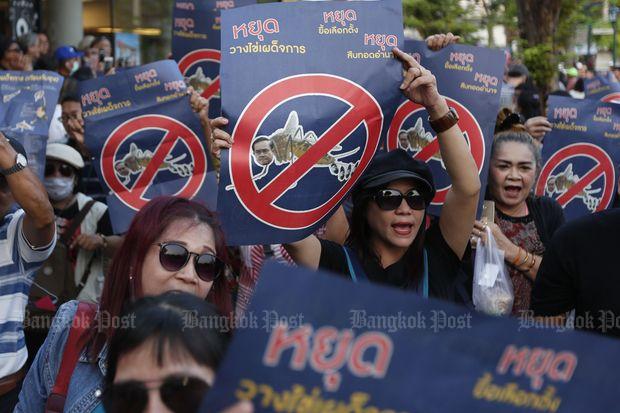
  1. A large numbers of the political cases tried in the military courts are not serious crimes. In a normal society, many of the actions for which people have been charged and prosecuted under the jurisdiction of the military court are not considered crimes. Instead, these are actions related to the exercise of the rights to freedom of expression and freedom of peaceful assembly, such as eating out at McDonalds’ as an action to express dissent against the coup d’état, not reporting as summoned by the orders of the National Council for Peace and Order (NCPO), organizing a commemorative activity on the anniversary of a past election, walking from home to the military court alone, riding a train to investigate alleged corruption at the military-built Rajabhakti Park, mocking the head of the junta, holding a press release insisting that ‘Universities are not military camps’, and taking photos with a red water bowl, to name a few.
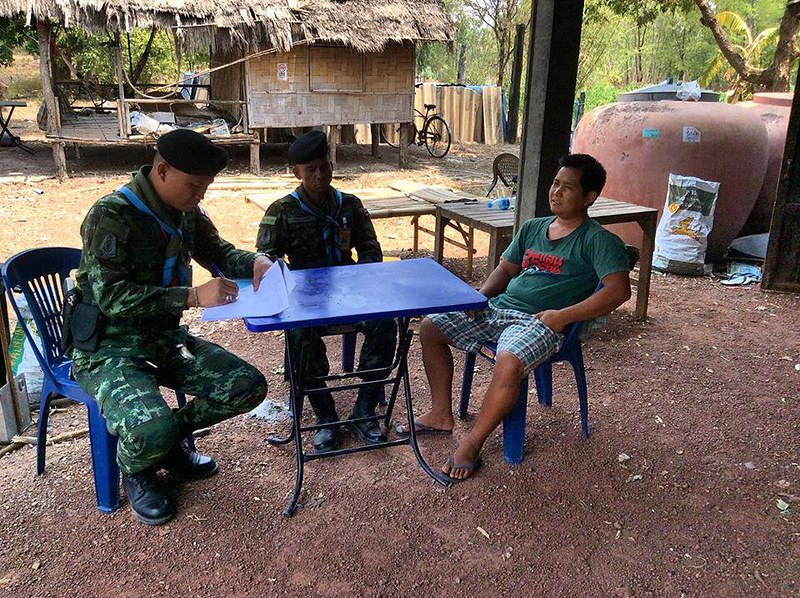
  2. Many weapons cases are not related to politics and are not serious offences. TLHR has found that the defendants in many weapons cases tried in the military courts are villagers or people of ethnic groups arrested for possessing unregistered cap guns or for not handing over the firearms to the authorities as ordered by an NCPO announcement. The alleged offenders usually use the guns for hunting or taking care of their plantations. Some possessed only one gun or antique firearms with no registration. Many alleged offenders are not involved with politics or violence in any way.
  3. The military judges lack independence and impartiality. The military judiciary is subordinate to the Ministry of Defense and the Defense Minister and the Commander of the Royal Thai Army is authorized to appoint military judges. This places the military judges under military command, which is different from the judicial system. TLHR has also found that in some trials, the military tribunal made a phone call to their superiors within the chain of command prior to delivering the outcome of a discretionary decision to a defendant, which demonstrates the lack of independence present in adjudication.
  4. Not all military judges are proficient in law. In the military courts, of the three adjudicators on a panel of judges, only a judge advocate general is required to be a commissioned officer with a degree in law. The rest of the adjudicators are commissioned officers appointed by commanders in each military court’s jurisdiction and are not required to possess a law degree.
  5. The military courts do not have sufficient personnel for the caseload. Each month, around 30 military judge advocate generals will move from court to court within the 29 operating military circle courts. Most courts have a stationed military prosecutor and 2-3 court officials who also have to perform as court clerks during the proceedings. The limitation of the military court staff to handle thousands of civilian cases has resulted in delayed prosecutions.
  6. International observers cannot attend hearings in provincial military courts. Military bases, where the provincial military courts are located, are designated as zones of national security and confidential state affairs. Therefore, foreigners, including staff from international organizations and embassies, are not allowed to enter the bases.
  7. Before martial law was lifted, the cases tried in military courts could not be appealed. Defendants in any case tried in the military courts during the period of 25 May 2014 – 1 April 2015 while the martial law was imposed were not entitled to appeal the court’s conviction or any decision to higher courts. This was true even in those cases with heavy penalties such as the death penalty. This is in conflict with the principle of the rule of law and denied the defendant’s right to appeal to a higher court to review the lower court’s judgment and impeded their access to the right to a fair trial.
  8. The military courts do not offer lawyers. In civilian courts, a defendant who does not have a lawyer and requests to have one can be appointed a state-provided lawyer. These lawyers are usually stationed at the courts and are provided at no charge to the defendants. The military courts, however, do not have a mechanism to guarantee the defendant’s access to legal assistance. The military courts did not provide lawyers for many defendants in need of lawyers in weapons cases. In other cases, the court officials sometimes contacted a lawyer to assist in cases, but erratically.
  9. The military court proceedings are extremely delayed. The military courts usually hold evidence hearings every two or three months. Each hearing begins in the morning and ends before noon. This schedule makes it possible to hear evidence from only one or two witnesses per round, or in situations in which a witness has very detailed evidence to present, it may take several rounds. Adjournment is also not uncommon. The taking of evidence in the military courts is therefore much more delayed and sporadic in comparison to the civilian courts that usually hold consecutive hearing dates which makes the proceedings swifter than in the military courts.
  10. The delays in military court proceedings forces some defendants to plead guilty, especially those whose request for temporary release is denied. They face a lengthy period of pre-trial detention and there many decided to plead guilty as charged in order to receive a reduced sentence. It is apparent that the delays gravely affect the defendant’s right to fair proceedings.
  11. The military courts generally hand down heavier penalties than civilian courts. For example, lèse majesté cases now have a new rate of penalty of 8-10 years of imprisonment per count, while the same offence in the civilian courts previously resulted in 5 years per count on average. As a result, many cases with several counts of violation have set new records for severe sentences. In another example, the offence of defying an NCPO order was punished by a military court with a 10,000 baht fine, reduced by half to 5,000 baht as the defendant pled guilty. The same offence in a civilian court was punished with a 500 baht fine.
  12. The military courts do not carry out a pre-sentence investigation. The civilian courts can issue an order to investigate a defendant and make a report of the facts, background, behavior, and life of the defendant to inform the court’s discretion in making sentencing decisions. The military courts, however, claim that they cannot order the Department of Probation, which is under the Ministry of Justice, to carry out such an investigation. Lots of facts about the defendants, such as a defendant’s mental illness, are not taken into account by the military court when they make decisions about punishment.
  13. The military courts do not allow lawyers to copy the records of some proceedings. In some cases, the judge advocate general stated that as the record of the proceedings has been read in the courtroom, a copy is not necessary. This differs from the civilian courts in which litigants can access and copy the records of proceedings.
  14. Restrictions on bail surety are more stringent than in civilian courts and standard criteria regarding bail amounts do not exist. The military courts do not accept an individual or the civil service status of an individual as a surety for bail and do not accept payment by a bail bond. The civilian courts allow a greater range of categories of bail payment and guarantors.
  15. The military court clerks still manually write or type the court’s record of proceedings. Unlike the civilian courts, which use voice-recording devices, the manual method in the military courts causes discontinuity and delay as the proceedings must occasionally stop and wait for the clerk.
  16. The suspects or defendants are taken to prison while waiting for the result of the request for temporary release. Both female and male suspects and defendants have been subjected to violations while being strip searched before entering the prison. The civilian courts detain the suspects or defendants in a detention room at the court while waiting for the result of the request for temporary release. If the courts grant temporary release, the suspects or defendants are released from the courts directly and do not have to go through the procedures to enter and leave the prison.
Tuesday, 3 May 2016

Update : The climate of fear over the country ahead of the referendum on a new constitution

As the country prepares to vote on a final draft Constitution, which was released publicly on 29 March, includes clauses mandating a fully appointed Senate,  seats reserved for senior military officers and enabling the appointment of an unelected prime minister. The charter gives the military broad control over administrative affairs even after an elected government is installed.

The draft also recommends that the junta-run National Council for Peace and Order (NCPO) will maintain absolute power until a new cabinet is formed and can intervene at any time to re-assume total power.       

The draft charter, written by the Constitution Drafting Committee chaired by Meechai Ruchupan, is scheduled to go to a public referendum on Aug 7.

Since the Thai constitution drafting committee completed the draft charter, the authorities have intensified their campaign to suppress the human right to freedom of expression. The law governing the rules for the referendum, which was approved by the current military-appointed legislature on 7 April, mandates up to 10 years imprisonment for anyone convicted of disseminating false information to influence voters or otherwise disrupt the referendum. 

Article 61 of the Referendum Act imposes a prison term of up to 10 years, a fine of up to 200,000 baht and loss of electoral rights for five years on anyone who publishes or distributes content about the draft constitution which deviates from the facts, contains rude and violent language, or threateningly discourages voters from participating in the referendum.

Repression and Intimidation

On 30 March 2016, the Pheu Thai Party issued a statement condemning the final draft of the constitution and urging people to turn it down in the referendum, scheduled in August. The junta threatened the Pheu Thai Party if the statement misleads the public.

On 2 April 2016, the Thai military ordered ban a seminar on the controversial draft constitution in the northern province of Chiang Mai as the public referendum on the draft is drawing near.   

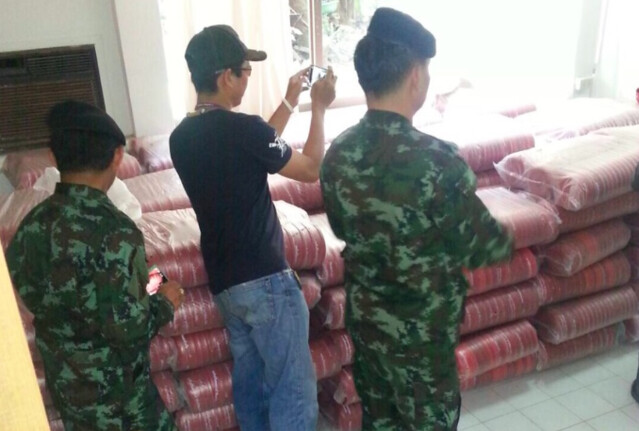
On 2 Apr 2016, military and police officers searched the offices of Pheu Thai party politicians in northern Thailand and confiscated red bowls inscribed with Thai new year greetings from former Prime Minister Thaksin Shinawatra.


Earlier, military officers in Chiang Mai arrested Theerawan Charoensuk, 57, for posting on Facebook a picture of herself holding the red bowl with the Songkran message from Thaksin.

The military filed a charge against Theerawan under Article 116 of the Criminal Code, the sedition law, for posting the picture. Later, the Military Court of Chiang Mai released her on bail of 100,000 baht, about 2800 USD, pending a military trail. If found guilty, she could face up to seven years in prison.

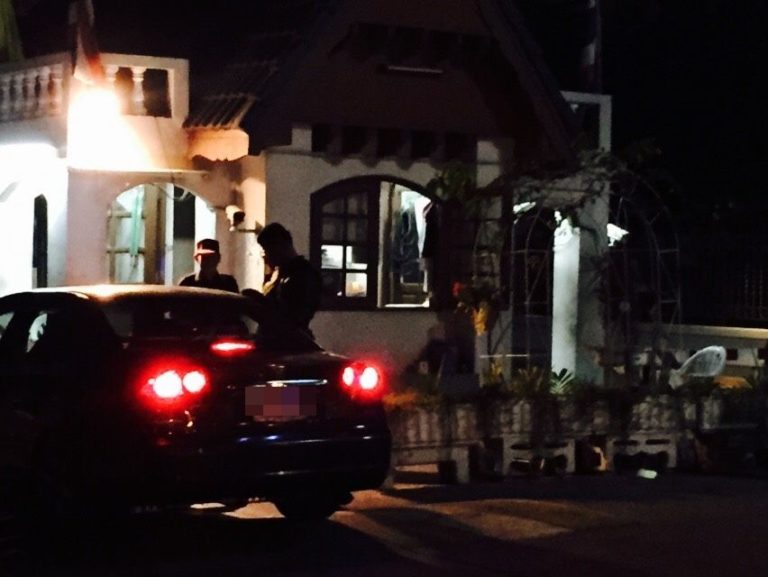
On 13 April 2016, a dozen soldiers in four vehicles arrived at the home of Pheu Thai politician and former MP  Watana Muengsuk who had publicly stated concern about Worachai’s welfare and the right to campaign against the draft charter before the referendum. 

On 18 April 2016, Thai Junta ordered a politician of Phue Thai Party and former MP Watana Muangsook to report to the 11th Military Circle camp in Bangkok. He was detained at the 9th Infantry Division in Kanchanaburi province near Burmese border over a statement he posted on a social networking site against the draft Constitution. He was freed after 3 days detention.
This is the third time that Watana Muangsook has been held in military detention without charge or trial since 2 March on the basis of his peaceful exercise of the right to freedom of expression.


On 21 April 2016, Watana Muangsook, a former Member of Parliament from Pheu Thai Party complaint that certain people pressured the Charoen Pokphand Company (CP), one of the biggest conglomerates in Asia run by the family of his former wife, to convince Weerada Muangsook, his daughter, to leave the country.

On 22 April 2016, soldiers in the northeastern (Isan) province of Udon Thani are intimidating anti-mine activists ahead of a planned forum on the environmental effects of a potash mine.


On 22 April 2016, the military has summoned the leader of an embattled indigenous seafarer community in the southern province of Phuket for a discussion, accusing him of violating a junta order. He was  intimidated by the military 

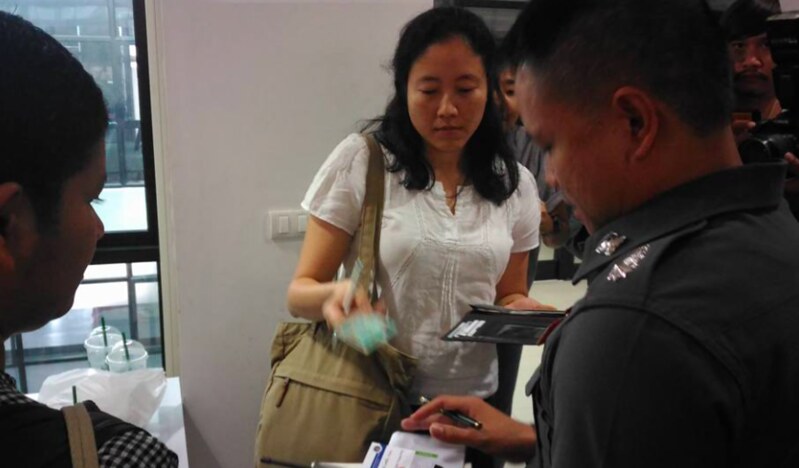
On 24 April 2016, the military indicted six activists for demanding an investigation into the Rajabhakti Park corruption scandal.  Those indicted are reported to be Sirawit Serithiwat, a student activist from New Democracy Movement, Anon Nampa, a human rights lawyer and core leader of Resistant Citizen, Kititach Suman, Wisarut Anupoonkarn, Koranok Kamda and Wijit Hanhaboon for violating the junta’s political gathering ban.

25 April 2016, Gen Prawit Wongsuwan, the deputy junta head and Defence Minister, told the media that no one is allowed to criticise the junta-sponsored draft constitution publicly as the Draft Referendum Act is already in force.

The deputy junta head ordered the authorities to launch investigations into the People’s Democratic Reform Committee (PDRC) and the anti-establishment red shirts for announcing their stands on the draft constitution.  


On 25 April 2016, the junta has threatened Bencharat Sae Chua, a lecturer of Mahidol University’s Institute of Human Rights and Peace Studies. The lecturer is distributing information for a vote against the military’s draft charter has been threatened with Section 61 of the Referendum Act of 2016. This could mean up to 10 years in jail.


On 27 April 2016, Thai military government cited power under Section 44 of the Interim Charter to arrest 10  Facebook users for their online messages criticising the Junta leader and the regime. The military officers detained them at the 11th Military circle. The eight  have been charged with inciting public unrest under the Criminal Code's Section 116. They can face up to 10 years in prison and a fine of 200,000 baht. 

On 27 April 2016, an election commissioner filed a complaint under the Draft Referendum Act against a fundraising organization in northeastern province of Khon Kaen. She was charged under Article 61 of the Referendum Act, where the penalty is up to ten years in jail, a fine of up to 200,000 baht and loss of electoral rights for five years.

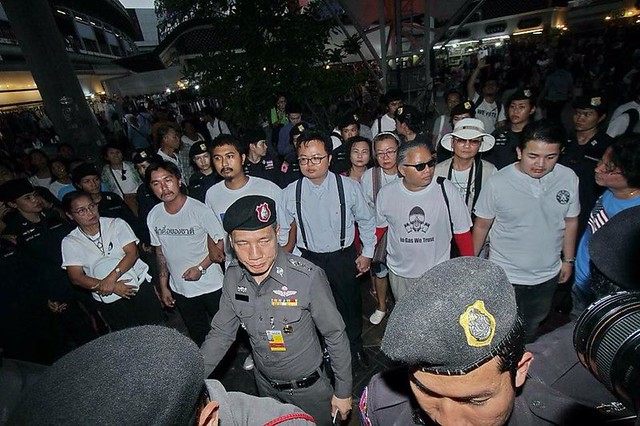
On 27 April 2016, Thai police arrested 16 activists for standing solidity with the 10 people abducted earlier by the military at the Victory Monument. One was taken away by the military after the arrest. Later, the 15 activists were released.


On 27 April 2016, Puea Thai Party members have been targeted. Some 300 police and soldiers searched the homes of two politicians among others in Nakhon Sawan, accusing them of being “influential” figures. The military barred reporters from the houses they searched.  They found nothing illegal other than a large number of red plastic bowls.

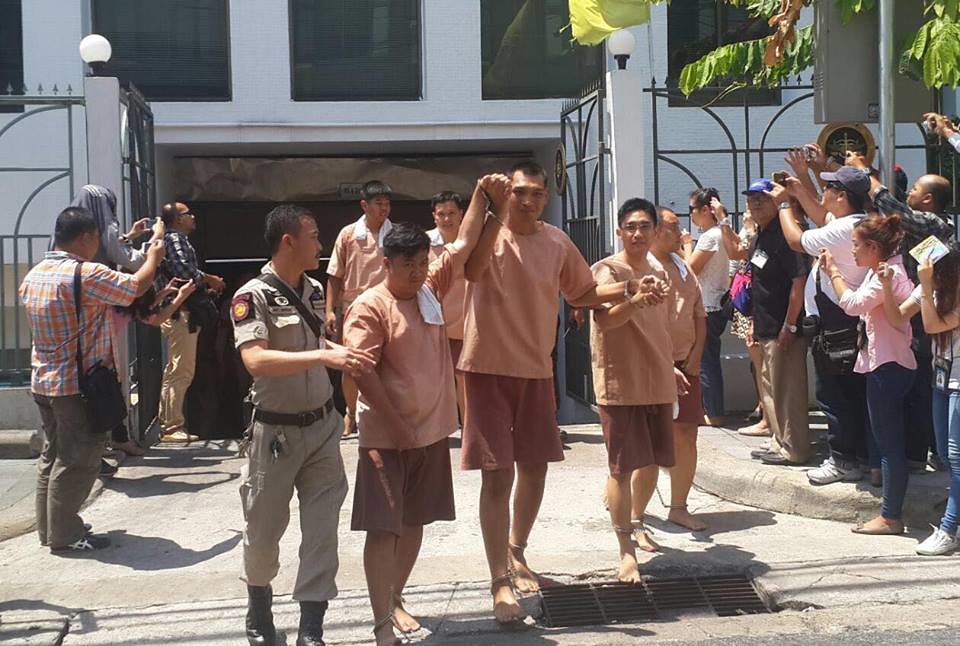
On 28 April 2016, The junta charged eight dissidents abducted by the military with sedition while two of the eight are also accused lѐse majesté.


On 29 April 2016, Military court rejects bail for abducted eight junta critics. In addition to sedition and computer crime charges, Harit Mahaton and Natthika Worathaiyawich were accused of insulting the monarchy based on personal messages in Facebook's chat function or standalone Messenger app.

On 29 April 2016, Burin Indin,  who was detained along with 15 protesters at the rally calling for the release of the10 at Victory Monument on 27 April. While other protesters were released that night, Burin was taken away from police custody by soldiers and held at an undisclosed location on 27 Apr. He was charged with lѐse majesté law.


On 30 April 2016, Burin Indin  was brought to the martial court to be indicted for for lese majeste, which carries maximum penalty of 15 years per offense. The military junta declared that Burin had committed lese majeste in his private chats with other people. 

On 1 May 2016, three anti-coup activists were detained when they gathered on the skywalk near the BTS Chong Nonsi station to demand freedom of expression. Police charged activists for violating the public cleanliness act by posting messages on post-its for the eight abducted junta critics while a few were interrogated for participating in the same activity.


On 2 May 2016, the 14 rules were issued by the Election Commission and formally became law, make even well-meaning discussion risky. Under the regulations, people must express their opinions with polite words without distorting the facts.

On 2 May 2016, Mr Narit, an abducted critic of the junta charged with lѐse majesté  warned it was no longer safe to send private messages to the inbox. Section 112 of the Criminal Code, or the lese majeste law, does not limit the crime only to public sphere, so personal correspondence can be used as evidence as well.

On 3 May 2016,  The military summoned a pro-democracy academic and activists into a military camp. Pinkaew Luangaram, a pro-democracy academic from Chiang Mai University, Rodjaraeg Wattanapanit, the first Thai woman to be awarded with the International Women of Courage Prize from the US government from her advocacy for democracy, and Pipob Udomittipong, an independent translator and democracy activist, reported to Kawila Military Base in Chiang Mai.


On 4 May 2016, The Thai election commission warned people selling t-shirts with prints about the referendum on the junta-sponsored draft constitution might face up to 10 years imprisonment.

On 6 May 2016, Patnaree Chankij, the mother of a prominent anti junta activist leader has been charged with insulting the monarchy, an offense punishable by up to 15 years in prison. 


Patnaree, 39, was previously questioned at home by the military in December 2015 after her son announced a plan to protest alleged corruption in a multi-billion baht army park project. Patnaree denounced the visit as an intimidation tactic employed by the junta to dissuade Sirawith from his activism.


On 8 May 2016, the Military Court granted temporary bail to Patnaree Charnkij, mother of a prominent anti-junta activist. Bail was set at 500, 000 baht. She was released with conditions include agreeing not to participate in political activities and being barred from travelling abroad without the court's permission.


On 10 May 2016, the military court allowed bail for the eight administrators of a Facebook page mocking the prime minister but police asked to further detain two them who were also charged with lese majeste. Six of Facebook 8 released on bail. Natthika and Harit have been charged with lese majeste law. The police want these two held without bail. Their release comes with the condition they cannot leave the country or incite unrest.


On 11 May 2016, although the six other suspects were granted bail on 10 May, the martial court denied release to Harit and Nattatika. Harit and Nattatika remain jailed on a charge of royal defamation. The lawyer will request bail for the pair again on May 19, when their current remand session expires.


On 12 May 2016, about 10 soldiers entered into Warachai’s house  without permission and removed electric cabling believed to be part of its CCTV system.

Soldiers and police raided the home of former Pheu Thai MP Worachai Hema after he reportedly told the media that junta leader Gen. Prayuth Chan-ocha exercises his power in a fascist way. 


On 19 May 2016, the Bangkok Military Court denied bail to Harit Mahaton and Natthika Worathaiwich, charged under the lèse-majesté law, ruling that the two might obstruct the investigation process and were flight risks.


The court again granted bail for the eight for another 12 days from May 13 to July 3. They are to report to the court in this case on July 3.

Ms Patnaree, the mother of an activist student Sirawith who had earlier been freed on bail, also reported to the court.  She was again released on bail and required to next report to the court on May 31.


On 23 May 2016, The military court sentenced Preecha 6 months in jail and a fine of 8,000 baht.
As Preecha confessed, the sentence was halved to 3 months imprisonment and a 4,000 baht fine. He was given a one year suspended jail term. He was able to return home today after paying the 4,000 baht fine.


Pracha was accused of such offences for giving flowers to support Pansak Srithep, a pro-democracy activist and the father of a boy killed by the military during the 2010 political violence, while the activist was leading a three-day march called “I Walk Therefore I Am” on 15 March 2015 to campaign against the use of military courts to try civilians. The march was organised by Resistant Citizen, an anti-junta activist group.


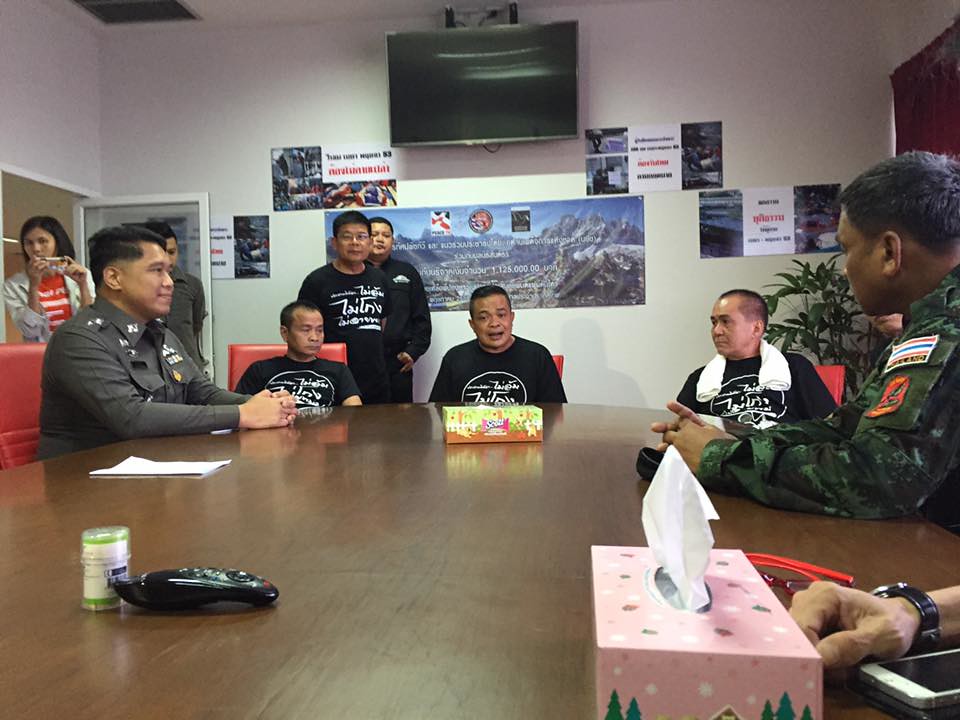
On 5 June 2016, military and police officers intimidated  the United Front for Democracy Against Dictatorship (UDD) at briefing on referendum watch campaign despite the junta leader’s promise that opening such centres is allowed.  The officer stated that they had been ordered to demand the cancellation of the briefing.


The UDD refused. Later, they managed to launch an Anti-Electoral Fraud Centre to monitor the public referendum to pass the junta-sponsored draft constitution. In the campaign, red-shirt volunteers will watch the referendum at polling stations across the country to prevent fraud.


On 6 June 2016, Junta leader, General Prayuth Chan-ocha had temper tantrum over the United Front for Democracy against Dictatorship’s action in setting up a centre to monitor for fraud in the scheduled charter referendum on Aug 7.  The following hour, junta was seeking to take legal action against the UDD whether those involved in the launch of the centre have violated the NCPO’s 3/2015 order which is intended to deal with people suspected of trying to spark political and social unrest.


UDD has asked the Constitutional Court to rule within seven days whether paragraph two of Section 61 of the Referendum Act is unconstitutional or not.


On 8 June 2016, The Constitutional Court agree to review the law which effectively banned any kind of campaign.


On 9 June 2016, Election Commissioner threatened legal action against activists for making music video opposing junta's charter referendum. Somchai Srisuthiyakorn, member of Election Commissioner said that activists who performing in the MV might be charged under the 2007 Computer Crime Act or for violating the orders and announcements of the National Council for Peace and Order (NCPO).


Under military rule, Thailand’s human rights crisis has gone from bad to worse. The repression will further increase until August. It is obvious that the military’s grand design is to weaken the political parties in order to have easily to disposable coalition government. Whatever the outcome of the referendum, the military will remain the real power.


Updated: 9 June 2016


Wednesday, 13 January 2016

A brief history of Thailand's Juntas and military regimes

Brief history of the coups that have taken place in the country:
1932: The bloodless coup of 1932, also known as the Siamese revolution of 1932, was a turning point in Thailand's history. A small group of military officers, known as the "Four Musketeers", overthrew King Prajadhipok, ending nearly seven centuries of absolute monarchy and establishing a constitutional monarchy. Thereafter, Thailand got its first constitution, paving the way for social and political reform
1933: Military stepped in to remove the first prime minister of Siam after 1932, Phraya Manopakorn Nititada. Phraya Phahon, who played a key role, then became Siam's second prime minister, a position he served for five years.
1947: Thai military stepped in again to remove the government of Rear Admiral Thawan Thamrongnawasawat, which was marred by scandals and corruption. The "Coup Group", put Khuang Aphaiwong, a founder of the Democrat Party, as the prime minister. The coup solidified the role of the army in Thai politics.
1951: The Silent Coup was attempted while King Bhumibol Adulyadej was in Lausanne, Switzerland. The group then appointed Field Marshal Phibunsongkhram as the new prime minister.
1957: When the rigged parliamentary election of 1957 continued to keep Phibunsongkhram in power, mass protests occurred in Bangkok, making King Bhumibol unhappy. That led Field Marshal Sarit Thanarat to stage a coup, and Pote Sarasin was appointed the head of an interim government.
1958: Sarit, the military leader, led a coup in 1958. It heralded the arrival of a new authoritarian era in Thai politics.
1971: Saying that there was a need to suppress the Communists, Field Marshal Thanom Kittikachorn staged the coup of his own government and dissolved parliament.
1976: Less than eight months after an unsuccessful overthrow attempt, the Thai military staged a coup and overthrew Prime Minister Seni Pramoj. In a nationally broadcast address, Admiral Sangad Chaloryu declared himself in charge of the newly formed National Administrative Reform Council, which would oversee martial law in the country.
1977: Thanin Kraivichien, only in government for one year, was overthrown in a bloodless military coup led by the man who had put him in power, Admiral Sangad Chaloryu, after Thanom was accused of leading a repressive government.
1991: Prime Minister Chatichai Choonhavan was arrested on his way to meet the king, where he was reportedly planning to ask to appoint a deputy defence minister viewed as a rival to the military elite. General Sunthorn Kongsompong assumed power as leader of a National Peacekeeping Guard.
Sept 19, 2006: The armed forces dismissed the government and revoked the country's 1997 constitution. Prime Minister Thaksin Shinawatra, on a visit to New York, declares a state of emergency in Bangkok after news of the coup.
May 22, 2014: Thai Army chief Prayut Chan-O-Cha declares military coup after months of deadly political turmoil.